

Report a Case
Child Protection

Protecting Child Domestic Workers from Harm in Alimosho

Report a Concern →
Protecting Child Domestic Workers from Harm in Alimosho
Through its Protect Child Domestic Workers from Harm programme, the Center for the Advancement and Protection of the Rights of Vulnerable People (CAPRIGHTS-VP) works with families, communities, schools, government agencies, and referral partners to prevent exploitation, strengthen reporting and response systems, and improve protection for child domestic workers in Alimosho, Lagos State.
Understanding the challenge

A Crisis Behind Closed Doors

Child domestic workers may experience physical, emotional, or sexual abuse, neglect, inadequate food and rest, and denial of education. Some begin domestic work at seven or nine years old. Poverty, unstable household income, and limited support for vulnerable families can increase the risk of exploitation. Because much of this work takes place inside private homes, abuse can remain hidden and difficult to report.

Why This Location?

CAPRIGHTS-VP has worked in Alimosho since 2017. Its presence in secondary schools across Igando and Ikotun revealed significant involvement of female students in child domestic work. The programme focuses on Alimosho because of identified protection needs, vulnerable households, and the organisation’s established community relationships.

The scale of child labour and domestic abuse highlights the need for coordinated prevention, accessible reporting channels, and stronger child protection services.

14M+
Children in hazardous child labour in Nigeria, among the highest rates in Africa.
Source: Source to verify before publication
2,029
Domestic violence cases reported in Alimosho in one year, including 113 child abuse cases and 105 child labour cases.
Source: Source to verify before publication
96.7%
Of child domestic workers in Lagos reportedly experienced indicators of the worst forms of child labour.
Source: Freedom Fund / NORC, 2024
1 in 5
Child domestic workers in Nigeria reportedly have no access to school.
Source: Source to verify before publication
What we do

Our Approach

The 2023–2024 pilot combined community outreach, school and market sensitisation, radio programming, a toll-free reporting channel, stakeholder capacity building, and data review meetings. The programme tested different ways to identify cases, strengthen referrals, and improve collaboration among organisations responsible for protecting children.
school
01

Community Outreach and Schools

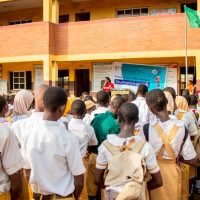
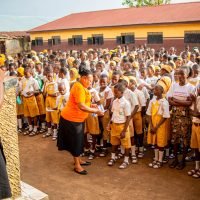
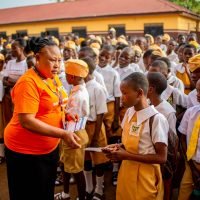
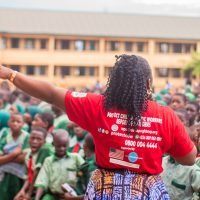
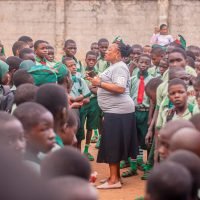
Sensitisation programmes in schools, churches, and markets across Igando-Ikotun.
  • School outreach reaching over 3,000 students and teachers.
  • Market outreach reaching over 2,000 people.
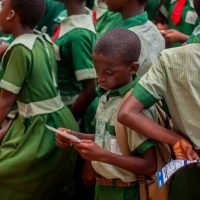
  • Distribution of over 3,000 IEC materials.
phone
02

Toll-Free Line and Case Reporting

A dedicated reporting channel helped community members report suspected exploitation.
  • Operate toll-free reporting line 0800 0004 4444.
  • Document and refer reported cases through partner networks.
radio
03

Radio Outreach

Radio programming increased awareness of child domestic worker protection and reporting options.
  • Live sessions on Jubilee FM and Lagos State University Radio.
  • Broadcast a recorded awareness jingle featuring the reporting number.
users
04

Data Review Meetings

Stakeholders reviewed cases, improved referral pathways, and identified case-management improvements.
  • Stakeholder data review meetings held on 28 June and 20 August 2024.
users
05

Stakeholder Capacity Building

Training strengthened child protection knowledge and case-management skills among professionals and community leaders.
  • Two capacity-building workshops for government officials, CSOs, community and religious leaders, and school administrators.
Measuring change

Results and Impact

During the pilot year, CAPRIGHTS-VP received and managed 21 cases involving child domestic workers. Cases were handled confidentially, with referrals made to relevant stakeholders for additional support, investigation, and protection. Aggregate reporting communicates programme performance while respecting the privacy and dignity of children and families.

Overall Achievement

78.00%

Households connected to government social protection schemes

Achieved: 88.00 Target: 50.00
176.00% Exceeded

People accessing government social protection

Achieved: 183.00 Target: 170.00
107.65% Exceeded

Child domestic workers supported through mobile safe spaces

Achieved: 96.00 Target: 60.00
160.00% Exceeded

People trained on livelihood skills

Achieved: 145.00 Target: 180.00
80.56% Ongoing

Guardians engaged through PTA sessions on CDW rights

Achieved: 386.00 Target: 500.00
77.20% Ongoing

People reached through IEC materials

Achieved: 7836.00 Target: 10000.00
78.36% Ongoing

People reached through community outreach

Achieved: 11525.00 Target: 15000.00
76.83% Ongoing

Children reached through school clubs

Achieved: 314.00 Target: 500.00
62.80% Ongoing

People earning new income from acquired skills

Achieved: 23.00 Target: 45.00
51.11% Ongoing

CDWs referred and receiving follow-up support

Achieved: 21.00 Target: 0.00
0.00% Ongoing
Our progress

Project Milestones

The programme developed a community reporting channel, expanded stakeholder collaboration, delivered awareness activities, and established a foundation for more coordinated case management. Lessons from the pilot informed the 2025–2026 extension.
2023

Pilot Project Launched

Funding from the Freedom Fund, with support from the United States Department of State, enabled the one-year pilot beginning in November 2023.
2024

Toll-Free Reporting Channel Established

A dedicated toll-free line was introduced to provide a structured channel for reporting concerns about child domestic worker exploitation.
2024

Stakeholder Referral Network Activated

CAPRIGHTS-VP worked with police, social services, health services, and civil society organisations to improve referrals and responses.
2025–2026

Programme Extension Approved

The programme extended through December 2026, expanding its geographic reach and deepening family empowerment, community advocacy, and direct support.
Voices and experiences

Testimonials

The programme works with community members and institutional partners to strengthen child protection. Testimonials should be added only when verified quotations and publication consent are available.

No testimonials with publication consent are available yet.

Looking forward

The Road Ahead

The January 2025–December 2026 extension builds on the pilot lessons and expands programme activities to Egbeda, Idimu, Akowonjo, Ikotun, and Igando. It focuses on reducing household economic vulnerability, changing community attitudes towards child domestic work, and improving direct support and protection for child domestic workers.

Overall Completion

78.00%
Q3 2026

Church Outreach and Livelihood Mentoring

Status: In Progress

Planned Activities

  • Train 60 vulnerable households.
  • Reach 1,700 people through church outreach.
  • Distribute 1,200 IEC materials.
  • Sustain 20 community influencers.
  • Support 25 additional people to earn new income.

Expected Outcomes

  • Improved household livelihood capacity.
  • Greater community awareness of child domestic worker rights.
  • Increased access to protection resources.
Q4 2026

Market Outreach and Child Rights Competition

Status: Planned

Planned Activities

  • Conduct market-wide outreach across target communities.
  • Hold the annual school learning competition on children’s rights.
  • Publish media stories and distribute IEC materials.
  • Continue engagement with community influencers and partners.

Expected Outcomes

  • Increased public awareness of children’s rights.
  • Stronger school participation in child rights advocacy.
  • Improved community involvement in preventing exploitation.
More about the project

Project Information

What we aim to achieve

Project Objectives

  • Improve collaboration among stakeholders who support child domestic workers.
  • Strengthen coordination and accountability in reporting and responding to exploitation.
  • Reduce the economic vulnerabilities that can push families towards child domestic work.
  • Improve community awareness of child domestic workers’ rights.
  • Improve access to safe spaces, referrals, case management, and direct support for vulnerable children.
What the project provides

Key Deliverables

  • Community and school sensitisation.
  • Market and church outreach.
  • Toll-free case reporting.
  • Radio awareness sessions.
  • Stakeholder data review meetings.
  • Capacity-building workshops.
  • Case referrals and follow-up.
  • Livelihood mentoring and mobile safe spaces.
  • Child rights school clubs.
Communities and people

Project Reach

  • Alimosho Local Government Area, Lagos State, Nigeria.
  • Target communities: Egbeda, Idimu, Akowonjo, Ikotun, and Igando.
  • Target groups include child domestic workers, vulnerable families, schools, community leaders, government agencies, and referral partners.
What we have learned

Learning Points

  • Trusted community and stakeholder relationships generated most reported cases.
  • The toll-free line provided an additional reporting channel.
  • Radio was useful for awareness but did not directly generate case reports during the pilot.
  • Stakeholder coordination and case review helped identify improvements to referral pathways and case management.
With appreciation

Our Funders

The Freedom Fund

Funding support for the Protect Child Domestic Workers from Harm pilot programme.
Visit website →

United States Department of State - Office to Monitor and Combat Trafficking in Persons

Support for the programme addressing child domestic worker exploitation.
Visit website →
Working together

Our Partners

Civil Society

Ireti Resource Centre

Counselling, psychosocial support, and referrals
Government

Family Support Units, Igando and Ikotun Police Stations

Legal action and house tracing
Government

Igando and Ikotun Police Stations

Legal action, house tracing, and summoning guardians
Government

Juvenile Welfare Centre (JWC), Alakara

Temporary shelter and referrals to MYSD
Government

Ministry of Youth and Social Development (MYSD)

Shelter placement and ongoing psychosocial support
Network

Child Protection Network (CPN)

Referral coordination, house tracing, and investigation
Civil Society

Nigeria Association of Social Workers (NASOW)

Referrals, investigation, and house tracing
Government

Alimosho General Hospital, Igando

Medical examination and sexual assault services

Concerned about a child’s safety?

If you have a child protection concern, use the organisation’s reporting channel to seek assistance.

Report a Concern →